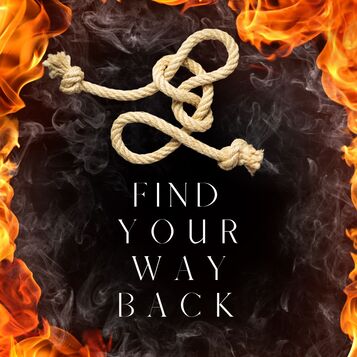
 We can all find that we twist ourselves into knots at times. Feeling someone hurt us, wanting to be seen as valuable, loved or maybe it’s to avoid someone’s anger toward us or their discard. It could be a million other reasons we make ourselves into a pretzel to try and be seen, heard, known. Loved.
We tie these knots ourselves – no one is doing it TO us. What cinches the knot ever tighter is when we are looking for these things from someone who is not living in their heart, but from their wounds or ego. We twist ourselves ever tighter in the hopes that they will somehow move back into their wholeness and truth and see us from love. This is certainly our attempt at control and it can become an especially ginormous energy drain in these kind of dynamics. I recently happened upon a podcast with Fr. Greg Boyle and it would seem like a synchronistic event, coming right at the time I needed what he is all about... You can decide to live in love’s energy which will loosen the knots you’ve twisted yourself into. How? That practice is to see everyone’s unshakable goodness. A genuine and unconditional positive regard shown to all – even those who disagree with you. When I do this it opens up the gate for me to also give this to myself. This is not some pink paint, unicorn, rainbow, toxic positivity answer to finding your way back to yourself. Quite the contrary. It's not a destination, it’s a practice that you have to repeat nearly every breath, all day long for it to get traction. When something is true, you can feel it. It lightens your load, you can get your legs underneath you. “Loving from a place of no matter whatness” feels like truth to me because it feels good when I do it. Demonizing people or things is always the opposite of the truth. That’s why it feels so crappy after that white hot moment of satisfaction. It just takes more and more demonizing in order to feel okay if this is the path we take. The way to a kinder, more unconditional love for myself is to also have it for others. Yes, even those who you’ve tied yourself up in knots to get them to see your inherent goodness and refuse to do so. These are simply wounded, unhealthy people who have forgotten who and what they are. If we carry around a pack of victim cards with blaming, justifying & self-righteousness – we disempower ourselves and make loosening the knots in ourselves much more difficult. We can either live from a place of woundedness or open heartedness. Fr. Greg says that being resilient is about how you choose to see. Long after experiencing a traumatizing event or relationship, you can continue to see that event, relationship, person as traumatizing, and it will be traumatizing. Or you could see that it was an opportunity for growth and learning. There’s no denying how hard things can be sometimes. The way out to the place of resilience, the place of restoration, the place of not allowing your heart to be hardened by resentment relies on one thing: forgive everyone everything. This is what frees us from our self-imposed prisons of anger, hatred, & resentment. What about boundaries? It seems that if we truly get in a place of loving from a place of no matter whatness for ourselves as well as every other being, it kind of takes care of itself. Sure, there will be those who aren’t ready for what you have to offer them. When you are in your love energy, you’ll know when you’re starting to tie yourself in a knot and choose to stay in your wholeness – with or without distance from the unready person. This isn’t a check the box, get it done kind of thing. It’s a practice that will help loosen the knots so you can find your way back to your true self. Take just 50% of the energy you expend twisting yourself into a knot of some shape to gain the approval of someone else and aim it at seeing the unshakable goodness in others and in yourself. Something beautiful will come out of it no matter how things unfold. Guaranteed. This is what hope feels like. XOXOXOXOXO Sandy
4 Comments
 As we age our intelligence and the way it works changes. This is a reassuring concept I found in the new Arthur Brooks book “Strength To Strength”. We move to what is called crystallized intelligence in the second half of life, where we bring together and synthesize our knowledge. That’s what this blog is about in regards to coming to understand some things about myself. A bringing together of some learnings. I have long held that my mission is joy! In a Tony Robbins five day immersion event a few years ago I stated my purpose to be “lighting a path” and “being an inspiration”. My firm belief is when we each shine our own light, we create the opportunity for others to do the same. “Lightmaker” is the term used by Karen Walrond and it’s a good one! When we acknowledge our own inner Divine spark and fan it to create light – this is home. Sexy, Love, Lit Up, Energy is part of my tag line for SLE Coaching and that is what that tag is all about. Being in our light. Here is the part that I have struggled with most often, not everyone is going to be on board or in agreement with your light. Sometimes people just aren’t open to it and that is not a reason to stop shining it. The thing is, just because someone doesn’t accept the gift of your shining light in the moment, that doesn’t mean it won’t impact them later that day, later that month or later in life. I have all too often allowed the lack of agreement with my light, to dim me. I has caused me to question myself; Who am I to be shining? Maybe I need to tone down, try to gain their acceptance, approval. I have indeed fully given my light to those who had no capacity to honor its gift. I did that. No one took it from me, I willingly gave it to those who didn’t value it. I don’t say this as self-blame as much as awareness. It’s not that I or they did anything “wrong”, AND their being incapable of handling or honoring my light has been a huge catalyst for learning for me. I am the custodian of my light. Period. I most certainly can and will share it – that’s really what it’s all about. But now, with this understanding and knowledge that I must keep the spark and tend to it myself rather than give it all over to someone who may be careless with it – I can create even more light. "There's nothing "wrong" going on here" is a phrase my coach Joy Miley has used often in my journey. I think I finally get what she is saying! It's all part of the whole that leads us to being in our light. XOXOXOXO Sandy 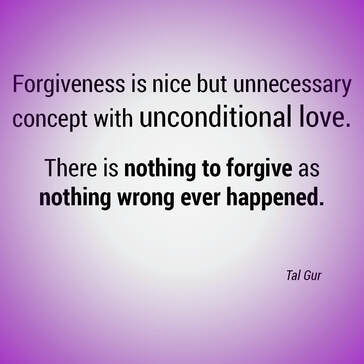 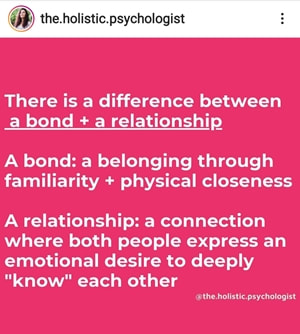 In our daily podcast, this week Spencer and I are focusing on encouraging our listeners to be separate AND connected. For some this very rare, once in a lifetime opportunity to be at home can bring up some things in our relationships that we may not have really taken a look at without this situation we all find ourselves in right now. Some of us find ourselves cooped up with people to the point of feeling a bit loony, while others are feeling very alone due to being by themselves. What if you are home bound with others and still feel alone? What if you are together, yet feel disconnected? I am going to share some insights I learned in the past few days from Dr. Nicole Lepera (AKA The Holistic Psychologist) – that you may find helpful in understanding some confusing feelings you may have around your connections with family, friends, spouses or really anyone at any time. There is a difference between a BOND and a RELATIONSHIP. A BOND is belonging through familiarity and or physical closeness. A RELATIONSHIP is a connection where both people express an emotional desire to deeply KNOW each other. To do this also, in my opinion, requires each person to also have a desire to deeply know themselves, their own emotions and the willingness to share that. This nuance in language was quite eye opening and clarifying for me around some confusing feelings I have in relationships at times. What you may be experiencing is that you have a bond with family members or others – and not actually a relationship. You share physical proximity and a familiarity and maybe even history or blood lines, yet there is a disconnect perhaps. We can even end up shaming ourselves that we don't feel closer to someone than we think we "should". Bonds can feel very safe and still lack that authentic emotional connection we all crave. Relationships are authentic emotional connections and Dr. Lepara says they have an important distinction: there is this emotional connection and a wanting to really KNOW the other person as well as know yourself. There is clear communication, boundaries, an openness and safety between you. A whole lot of us, me included, are not very skilled at creating these deeper emotional connections. The great news is that it is a skill set that we can learn. For more clarity, Dr. Lepera shared some examples of a lack of authentic emotional connection. They may include: +Often incessant teasing or mocking as an attempt to feel close or a replacement for real connection. This is not to say there isn’t room for teasing or playfulness in relationships. Some people use teasing and joking to protect themselves rather than have to authentically connect – same could be said for being angry much of the time. It's a shield that prevents deep connection with vulnerable emotions. +Lacking authentic interest in your inner feelings and the experience you’re having in life. This is a big indicator of whether you’re in a bond with someone or a relationship. +There is a fear of upsetting the other person by saying “no” or disagreeing with them. Walking on eggshells. Rearranging yourself to keep the peace. +Gossiping, venting or shared worry as a way to express love – hot wiring a connection through shared complaining or fear. This one is easy to fall into, it’s not authentic connection but instead using externals to create a connection. 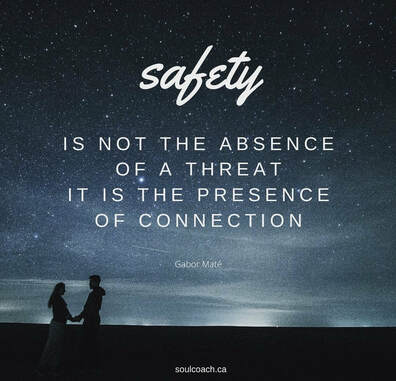 Brene’ Brown in her most recent book “Dare To Lead” lists the biggest obstacle to courage and daring leadership is not fear – but how we armor up in our response to fear. Well – try this one on for size in light of what I’m offering up here on what authentic relationships… "Safety is not the absence of a threat. It is the presence of connection." - Gabor Mate'
Humans are hardwired for connection. If we choose to keep those connections surface based, either due to our own armor or a lack of interest in deeply KNOWING each other – then just know that you will have bonds with people, but not relationships. It’s certainly an option you can choose. There is nothing wrong with bonds. They serve an important purpose. Reflection questions: 1. Am I trying to force a connection that is a bond - to behave like a relationship? 2. Where do I want to place my time and energy? Bonds or relationships? 3. If I want a relationship with someone, am I expressing a genuine interest to really know this person? Am I making an emotional investment in making that happen by being curious and not making assumptions? 4. What am I doing today to create an authentic emotional connection with myself? 5. Is the other person willing or capable of creating an authentic emotional connection with me? For me, I am really clear that what I want are authentic emotional connections… AKA relationships. To do this I must have the curiosity, desire, & the willingness to really deeply KNOW others and to not hide myself or my own feelings in that process. This is all a skill set that takes practice. We CAN learn this and it takes willingness as well as awareness. I'm on the path with you, learning and growing. XOXOXOXO Sandy 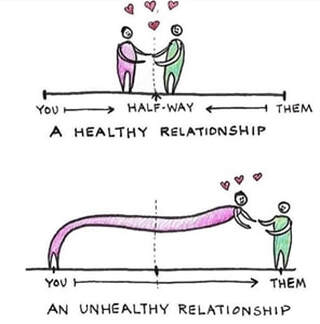 Healthy living gets an extra spotlight this time of year. Health and well-being are certainly about much more that what we eat or how much we exercise. One huge component of health is the quality of our relationships. Relationships are central in all our lives on some level, whether it’s romantic love, friendships, family, co-workers – relationship health is key to our well-being. Now, before you tune out because you don’t think the idea of unhealthy relationship applies to you… 100% of us have been receiving end of unhealthy relationship behaviors and 100% of us have done unhealthy things in relationships. It’s part of being human. What a healthy relationship looks like is not the same for everyone, so what is healthy for me might not be what it takes for it to be healthy for you. In this way, a relationship is a creation – you build it with another person. Some relationships will be more intimate than others because some people have a similar capacity for building to your capacities. Some people are more demolition than builder and do things that make it difficult to build with them. No one is right or wrong, just different capacities for building intimacy. Lack of reciprocity emotionally can make it difficult to build a healthy relationship. If you share and share and share your feelings and the other person doesn’t have the capacity to be vulnerable and share theirs as well – this makes the building process very, very difficult. It has taken me a really long time to understand this in my life. I am also coming to understand that when you do a majority or the emotional lifting in a relationship, you actually kind of train the other person to be emotionally "lazy" with their reciprocity. These relationships with those who are less capable of reciprocation don’t have to be discarded or discounted, but if you don’t have equality in the level of vulnerability you and the other person are willing to go to – you just have to be realistic about that relationship. Some people are just either not willing or capable to go to a deeper, heart level in emotional connection and that’s okay. But it that is what you need or what to give and it’s not reciprocated – it will compromise the trust in the relationship in a painful way. It won’t feel safe to be vulnerable and authentic, not only because you feel overly exposed emotionally but also because it is the reciprocity of emotional connection that helps us build a sense of who the other person is as well as helps you to know who YOU are as well. Yes, we get to know ourselves by getting to know other people... paradox. My old pattern in these relationships was if the other person was not giving or sharing as much as I was emotionally – well I’d just give more! This is a big time set up for resentment, hurt and exhaustion. Which certainly isn’t what a healthy relationship would look like for any of us I’m guessing. So, knowing what a healthy relationship is for you is great info and can help you to drop blame when others aren’t capable relationship builders. You can stay kind, compassionate and understand who can meet you where you are in skill level and desire who can’t. And if you catch yourself doing more of the building than the other person, it’s time to ask yourself what’s driving you to accept less reciprocity than you need to feel healthy. The answer is always within yourself. XOXOXOXOX Sandy 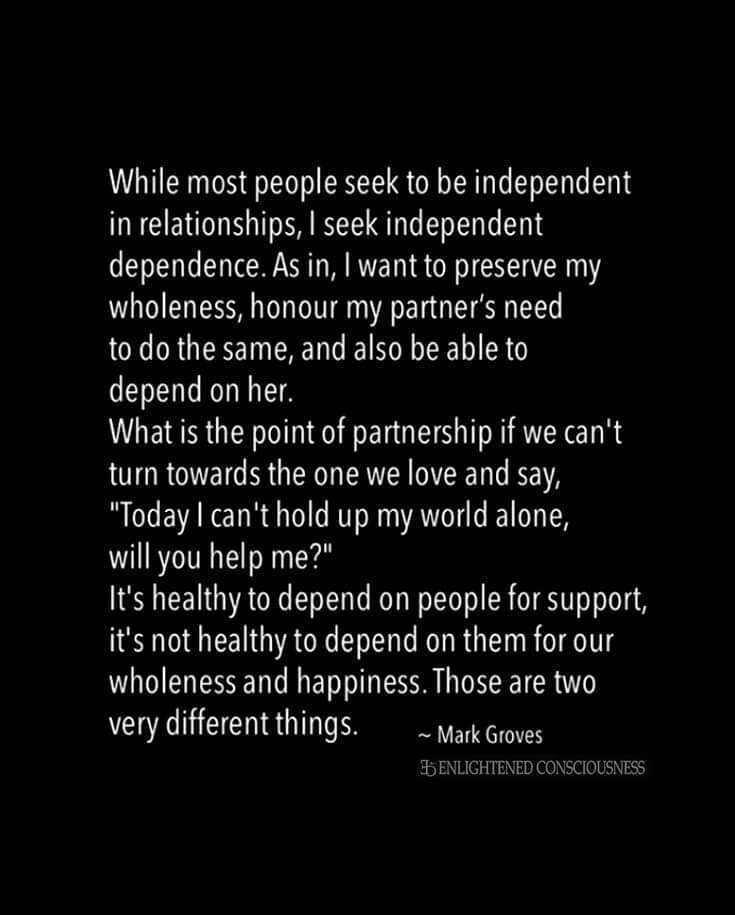 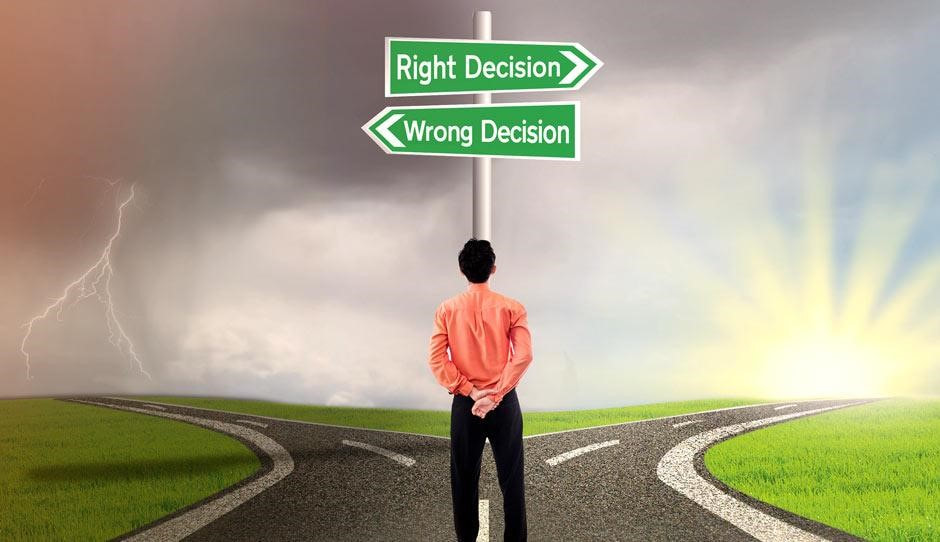 Each week, my friend and co-host of the Double X Factor, Spencer Williams and I, select a topic that we find ourselves dealing with or working on in in our own personal growth and then we chat about that in our daily three minute podcast. As it typically goes when either of us suggests the topic we are noticing in our own lives, we each do a bit of research and looking within to see what comes up that we bring to you in these short segments. I’d like to share what I found as I looked within myself on this topic… fear of making the “wrong” decision. This is where my own version of perfectionism has been holding me hostage. If you have ever made a decision that at the time felt like it was totally true and best for you and it lead to some amazing results and then perhaps suddenly took a turn for the worst – you can certainly find yourself unwilling to make additional decisions that feel like they are true or good for you. Depending on the level of trauma you experience when you decision went south, you can find yourself completely locked up in a perfectionistic double bind… darned if you do and darned if you don’t. Frozen. So if you have found yourself locked in indecision, here is something that can help start moving you out of fear of making the wrong decision… look a little deeper. If you have lost trust in yourself because a previous decision went in a terribly painful direction, it might not be that you fear making the wrong decision as much as it is about trying to avoid humiliation, shame, guilt or being hurt. That inner voice that is fearful of a repeat performance of something hurtful can be so much louder than our intuition and it can drown it out for sure. Perfectionism and thinking we must never make a so called “wrong” decision is a shield. One of the many forms of armor we use to protect ourselves. Dr. Brene’ Brown reminds us that perfectionism is not self-improvement, at its core, it’s about trying to earn approval. Let me say that one again, perfectionism is about trying to earn approval. And she also reminds us that perfectionism is NOT a way to avoid shame. Perfectionism is a function of shame. If that’s not enough to encourage you to release your perfectionism, know that it is self-destructive and addictive. We think if look or do everything perfectly enough, we can avoid feelings of shame, blame and judgement. But it doesn’t work because often when we experience these feelings, we often believe it’s because we weren’t prefect enough. So, what I am doing is looking within. My reluctance to make a decision has its roots in fear. What is driving that fear of making a “wrong” decision? What has happened to me in the past when I felt I got it wrong that might be keeping me stuck now in the present? Rather than seeking approval via perfectionism, I am now trying to seek CONNECTION. VERRY different approach. And this takes vulnerability – the antidote to perfectionism. 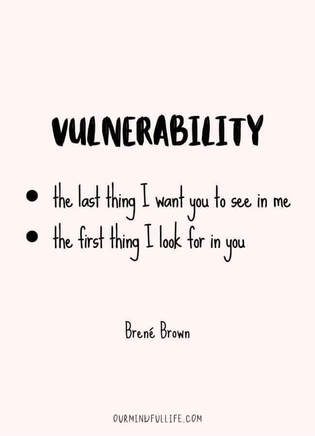 Sounds counter-intuitive doesn’t it? Vulnerability doesn’t’ mean doesn’t necessarily mean sharing our deepest, darkest, most painful emotions. It’s about intimacy. Think about that word… in-to-me-see. It’s not just about our struggles, but also about what’s amazing in our lives. When we over-protect ourselves with perfectionism, we miss out on connection. All for the sake of thinking we need to be in control in some way. Suppressing our true selves with perfectionism builds walls around our heart. We can truly experience the amazing emotions relationships offer if we’re not authentic and vulnerable. Vulnerability isn’t just the center of hard emotions, it’s the core of ALL emotions. To feel is to be vulnerable. So if you believe vulnerability is weakness, means we believe feeling is weakness. Like it or not, humans are emotional beings. Vulnerability is the birthplace of what we all want… belonging, love and joy. Life coach and author Christine Hassler has some great tips on developing our skill of being vulnerable. If it’s a skill - that means you can learn it – but it’s gonna take some practice.
XOXOXOX Sandy 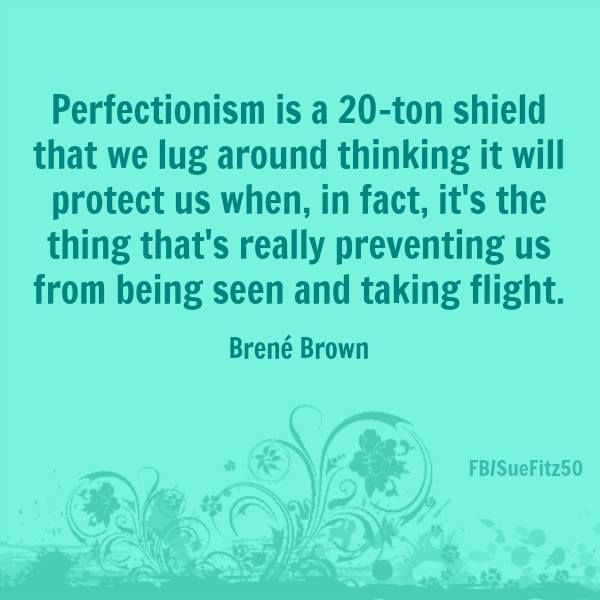 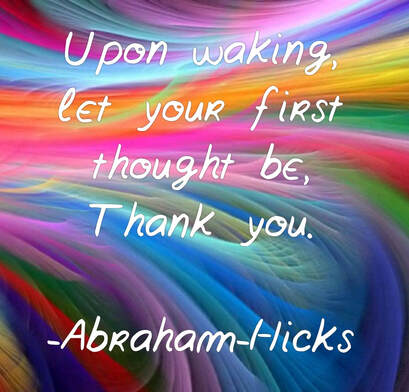 It may seem like an obvious topic for the week of Thanksgiving…gratitude. What I would like to offer up here are some thoughts on how to do gratitude, when you just don’t feel like it. What happens if we just aren’t feelin’ it right now? It happens to all of us and trying to should ourselves into it, can actually be super counter-productive and keep us in a less than grateful place even longer. There’s loads of science to support the idea that an attitude of gratitude has a positive impact on our brains and our lives. We even know that when we focus on appreciation or gratitude that we feel lighter, better, more authentic. And yet… it is quite possible to go long stretches of time where we seemingly forget to feel gratitude. Maybe you recently received a very scary report from the doctor. Maybe someone you love has turned away from you. Maybe you are dreading the holiday season for any number of reasons. Or, just maybe you can’t even point to anything in particular – you just can’t seem to hang on to feeling grateful and this may be the most challenging for us to make peace with – when we can’t point to a good reason to not feel good. Well, there are some things that can be obstacles to gratitude that aren’t anyone’s fault… Our brain’s natural bias toward negativity. I’ve talked about this here many times, but we humans are wired for negativity as a means of keeping us safe. The only thing is, we aren’t being chased by saber toothed tigers much these days – so our negativity bias focuses mostly on emotional dangers. In his book “Hard wiring Happiness” Rick Hanson says “The mind is like Velcro for negative experiences and Teflon for positive ones”. This explains a great deal of why we sometimes find it difficult to feel grateful. Overcoming this natural brain function takes effort and practice. Gratitude journals, learning to re frame the meanings we place on things and situations can go a long way in being an antidote to this programming we all have. Another obstacle to feeling gratitude is comparison. This also is a part of human nature. In today’s social media landscape, we have more ways than ever to feel those nagging feelings of being sub-standard in some way compared to others. We probably most often slip into downward comparison, which is where we see ourselves as not as good as others. My antidote on this one is something we discussed here last week – compassion and seeing common humanity in others and in ourselves. No one makes it through this life without hardship, suffering, mis-steps and failures. When we can keep this in mind, it helps us to see others as people, just like ourselves. According to author David Emerald, all of us live on a continuum between gratitude and feeling grumpy. Accepting your current emotional state, rather than making it a problem, is actually a leap forward. In fact, noticing that you are not feeling grateful increases your self-awareness, which eventually can lead you up the spectrum closer to feelings of gratitude. When we can embrace even the part of ourselves that feels more grumpy than grateful, we actually have a better chance of knowing our authentic selves. This doesn’t mean you hang out constantly on the end of the spectrum where you are grumpy and cranky —instead personally own your current state and take responsibility for taking a few steps that are known to contribute to feeling better. So, some things to try if you’re not feeling grateful and you’d like to amp up that muscle this week…
XOXOXOX Sandy  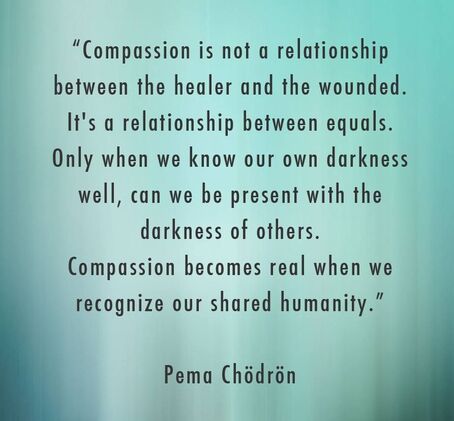 This week on The Double X Factor podcast we are looking into recognizing when we are feeling pity versus feeling compassion. I think for me, many times in many relationships I believe what I am feeling is compassion – yet as I look into this more deeply – I’m realizing that very often it is actually pity. Pity has a flavor of one person being less capable than we are. When we are serving up pity, we are actually coming from a place of thinking this person cannot figure things out for themselves and that we need to help them fix it. We place them in the “one down” position and ourselves as a bit more superior. This is perhaps due to pity coming out of fear – fear of what this person’s actions say about us, fear that we might have to deal with some of our own discomfort, fear and lack of trust that this person has the same capabilities we do to figure out their stuff. When we see ourselves as superior in this way, it’s a pretty short drive to feelings of contempt towards them for not doing what we see as the “right” thing. It's as if we are saying "You can’t take care of yourself, so I need to fix it for you in order to make myself more comfortable." Pity has a lot more to do with am I ok, than are THEY ok. Compassion on the other hand is quieter. You have to be connected with yourself in order to give it. You may need to sit with your own discomfort at seeing someone struggle a bit to truly be compassionate because compassion means we see others as equals. Not as one person is wounded and the other is the healer as in pity. Pity is to make the other or ourselves less human. When we come from compassion, we trust that they will figure things out in a way that is right for them. Compassion is unconditional and loving. It’s not about fixing. When someone recently asked me what I think compassion feels like, I looked no further than my very close girlfriends. When I am struggling with something, they don’t try to solve it for me or tell me what to do. They don’t judge me and they show that they have confidence in me that I will indeed figure it out. They are supportive and validate my feelings for sure – and they also hold me accountable at the same time. There is an attitude of acceptance and love – not fixing. This is what it’s like to have someone’s back I think. It’s also how to have OUR OWN back – to give ourselves this kind of SELF-compassion rather than self-pity. What a lot of compassion requires is to be present. To just be with someone as they work through their difficult feelings or discomfort. This is probably why true compassion is so rare – we all struggle with being truly present. When we are compassionate we are willing to walk next to someone, loving them as they figure it out for themselves - without judgement. People don’t want our pity. They don’t want us to feel sorry for them, it’s a very disempowering way to view others. I think about a quote I saw attributed to the actor Michael J. Fox who has Parkinson's disease – he said that "pity is a benign form of abuse". That kind of drives it home now doesn’t it. I am currently reading the newest book by Buddhist nun, Pema Chodron and in it she shares a practice for building compassion and dropping judgement. It’s called “Just like me.” Let’s say you are stuck in traffic, this is a condition that can stir up some pretty big discomfort in we humans. You look at the angry driver in the car near you who’s losing it and you say to yourself “just like me, this person doesn’t want to feel uncomfortable. Just like me this person loses it sometimes. Just like me, this person doesn’t want to be disliked". We can’t presume to know exactly what someone else is feeling and thinking, but we do still know a lot about each other. We know that people want to be cared for and don’t want to be hated. We know most of us are hard on ourselves and that we get emotionally triggered, but we want to help in some way. We know every living being desires happiness and doesn’t want to suffer. This practice is about common humanity. It reminds us we all have times when our triggers or unhelpful habits, like getting angry, take hold. This can help us to have compassion for the other as well as ourselves. It helps to keep us out of pity and seeing others as incapable in some way. Just like us, others have the capacity and ability to find their way. Actually, unless we find our own way, we won't get the lessons that we need for our own particular, personal journey. It’s important not to use this practice of Just Like Me as just another way to bash ourselves. We can use it as an opportunity to also see great things happening too. We can see someone helping another and think to ourselves “Just like me”. Another disclaimer, having compassion doesn’t mean we can’t take a stand. It’s important to speak up when we’ve been hurt, when we see others being hurt and when we see examples of abuse of power. If you want to dive more deeply into this idea, I highly recommend Pema’s latest book titled “Welcoming the Unwelcome”. If that title scares you just a bit – you’re just like me! I’m coming to understand that having true compassion is really only possible when we are in our true authentic nature. When we are coming from the love that we are, we have the capacity to offer true compassion rather than pity - for not only others, but also for ourselves. When we come from authenticity, we are present, loving and our judgment dissipates. I’ve been on a mission for a few years now, trying to emit my full light more of the time. Perhaps ending the war within myself and being at peace, offering myself and others compassion (rather than pity) is the fast track to shining my own light. XOXOXOXOX Sandy 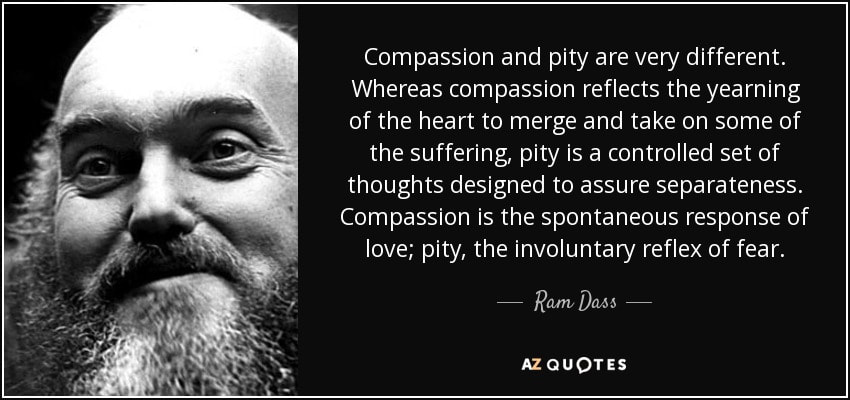 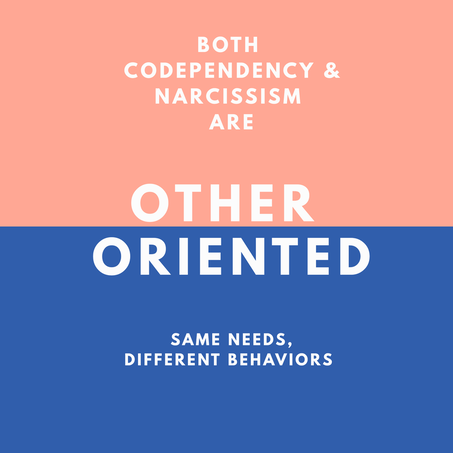 This short blog may shine some light for those in relationship with someone who rides a bit higher on the narcissism scale. We are all on the narcissistic spectrum to some extent because in order to be emotionally healthy, we must have an ego. Those who are further up the scale of narcissistic behaviors have not learned to manage their ego so much, and it is running the show. Codependents and those with more narcissistic tendencies tend to be drawn to one another. They are a perfect fit actually – the narc is in need of affection and attention to feel good about themselves and the codependent is often hyper-focused on others with their identity attached around serving the needs of others to the extent that they disregard their own feelings and emotional needs. So the two fit together like a two puzzle pieces. Here is why I believe many codependents often fear that THEY are the narcissist… both these ways of dealing with core wounds are based in and OTHER ORIENTATION. Both are about lack of a healthy sense of self. Each struggles to get a sense of who they truly are and their identities are much defined by the opinions, behaviors and words of others. YES! Almost everyone wants to feel loved and important. Narcissists and codependents create excessive reliance of others’ approval to meet these needs. According to Melanie Tonia Evans (who I highly encourage you to check out if you suspect you are in a relationship with a narcissist or energy vampire of any kind) says that both these approaches to dealing with emotional wounding share some commonalities: shame, denial, control, dependency and dysfunctional communications and boundaries. These are all just coping mechanisms to trauma of some sort. We ALL have trauma – it’s a wound, a scar where our flexibility is reduced in our response to the world. These responses are symptoms of what we need to heal in ourselves on some level. It’s a gateway. When we get ready to take responsibility for our own wounds, our own triggers, our reactions in relationships, THEN we can move toward knowing the fullness of who we are, on our own terms rather than based on how others view us. Reliance on the view of others to know ourselves is so precarious! They can’t possibly see us with complete clarity nor can we depend on them to focus on us as their sole mission! Being responsible for how we see ourselves is crucial to our happiness, our relationships and our well-being. This process is not about ‘becoming’ someone or something. It’s about REVEALING our true light, our true nature that’s been there all along. We don’t need to hide who we are in approval seeking or acceptance by others. We only need this to the extent that we are not giving it to ourselves. Healing isn't about changing who you are. It's about changing how you FEEL about who you are. If you are reading this, my solid guess is that you are not the narcissist in your relationship. But you do have an opportunity to get on firmer ground with knowing the beautiful essence of who you are, without being reliant on the approval of others of who you are. The great news is that you already have everything you need to this. XOXOXOXOX Sandy  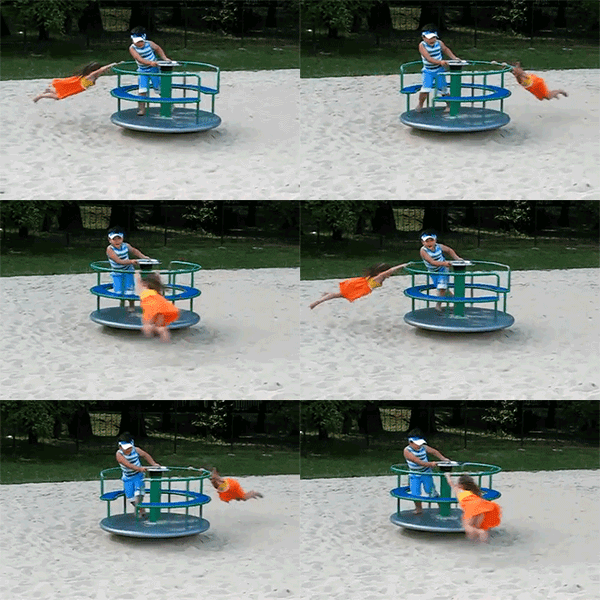 Trying to be what is expected. THIS has pretty much been my way of being up to this point in my life. Be what is expected or mostly – be what I ASSUME is expected of me by others. My motivation is simple, if I get it “right”, I will get what it is I am seeking: Love, acceptance, and belonging. The problem with this equation is that I am seeking what I desire everywhere but where it actually must come from… within. “Stay out of the way.” “I’m busy, go play in the other room.” “Be quiet.” Sometimes these messages we receive early in life are verbal and sometimes just shown to us by example or even just a vibe we feel. My parents were older when I came along and I even though I had two siblings, they were both out of the house by the time I arrived. So much of my time was spent with adults until probably age ten. Older parents are often more adept at having patience but they also might have a certain amount of “I’ve got nothing left in my emotional tank to handle this full strength girl! I need her to go play and be quiet.” Which I became very good at, sometimes. I seem to have created this equation of meeting expectations to get love very early on. My dad was very athletic in his youth and by being in sports or having athletic accomplishments I received more attention from him, more love. My focus on being athletic has continued well after he was gone, still trying my old method of gaining love and attention by sports or fitness accomplishments. Mom was busy. Perhaps trying to be what SHE thought was expected of her. Stay out of her way, play on my own and she will love me and give me attention later. While she never said it to me I think the message I got was “Tone your shit down Sandy.” This too is a message I have still hung onto well after she was gone. We all get this message to some extent, even if our parents did the very best they could, most of us learn to suppress parts of ourselves to be accepted and meet the expectations of our parents. Of course! This pattern I developed continued into my romantic relationships. Over and over and over again. If I can just be what this person wants and expects me to be, they will reward me with their love and acceptance. I kind of see it like riding a merry-go-round on the playground. You get on the “Be what they expect” ride slowly at first. Then as you contort yourself to be what others want, it starts to speed up, going faster and faster as they need you to change in more and more and more ways in order to meet their expectations. Or even worse, if there are multiple people who all expect something different from you at the same time, you start to feel like you’re going to puke as the life gets sucked out of you and you emotionally abandon yourself. Eventually the only option is to let go and get flung off onto the ground. As much as this hurts, you just can’t stay on the “I must meet their expectations of me to get love” ride any longer without losing yourself, and your lunch!  None of this is the other person’s "fault". These other people are simply reflecting back to us our own feelings and view of OURSELVES. If I don’t meet someone’s expectations, I withdraw my own love from myself. I judge myself. The other person didn’t turn away from me… I did. If you are super practiced at hanging on to the "please others merry-go-round" handle like I am, giving yourself permission to choose yourself and let go of trying to meet another person’s expectations is beyond scary. It’s devastating. The reason it is so horrifying is because we have not found a way to access our own approval, acceptance and love for ourselves and it all rides on this other person’s view of us. The merry-go-round or the other person isn’t what’s causing my pain, it’s my beliefs about what it means about me and my feelings about myself that are the source of my suffering. So was/is it the real me to be athletic? Of course, that IS a PART of me. Was it the real me to tone my shit down? Yes, that IS a PART of me. Is it the real me to be strong and confident? Indeed, that is a PART of me. Is it the real me to be scared, sad, even confused into seemingly long-term inaction. Yes, this is PART of me too. The integration of all the parts of ourselves, accepting even those parts that are uncomfortable for ourselves and others is what it means to be wholly ourselves. Or maybe that should be HOLY ourselves. ALL of us are both dark and light. We all have parts of us that we embrace and qualities or parts that we try to deny or hide. When we deny those parts of ourselves we deem “bad” or what Jung called “the Shadow Self”, we will judge those qualities or behaviors in other people. We will run away from being who we are and this is not the kind of running that leads to freedom. Freedom is about feeling safe to be yourself – ALL of yourself. Without fear of being blamed or criticized for it. Others are going to blame and criticize us. That’s just a fact. We have to find a way to not join in on the dog-pile when this comes our way. We ALL mess up, and sometimes in super important moments and this can be hard to give ourselves compassion in those times. Yet, if we don't, we can get very stalled in our journey. Sometimes other people in our lives, people who are incredibly important to us, have big, even unconscious expectations of us to fit a profile they have created about us in their mind. This is often about what they believe our showing up in that way means about THEM. When we vary form that profile, as we inevitably will, they can become very uncomfortable and even judge us and actually withdraw their love for us. And again, this is not about the other person, but about how we don’t accept all of OURSELVES when we fall short in some way. The other person in our relationships is always showing us something about ourselves if we are courageous enough to look down there in the darkness. We all need other people. That’s part of being human. But, when we make meeting the expectations (or assumed expectations) of others our route to feeling loved, it will suck the sweet life right out of you. This has been the most challenging part of my journey to date – learning to choose myself, which can mean letting go of the merry-go-round and getting a pretty devastating bounce on the cement in the aftermath. This takes a great deal of courage for sure because you KNOW it’s going to hurt like hell. It takes time to recover from that kind of damage because you lost a part of yourself on the ride. You have to dig deep to rediscover it within yourself. No one took that part from you, you gave it away in approval seeking & trying to get the love from someone else when you weren’t giving it to yourself. Tracy McMillan posted a great video on Instagram today about coming home to yourself and what that means. It means we stop looking outside ourselves in other people and other things to gain the approval and acceptance that we seek because we are not giving it to ourselves. All next week Spencer and I will be diving into this topic on The Double X Factor. I invite you to listen, comment and see if there is anything I am learning on my journey that may be helpful for you to feel less alone. When we shut down parts of who we are to make others more comfortable, we aren't giving the world what we came here to give. Write yourself a permission slip. Remind yourself that it's not only okay to be you, the beautiful, messy, hard, soft, entirety of who you are - it's a must if you want to live your purpose in this life. XOXOXOXOX Sandy  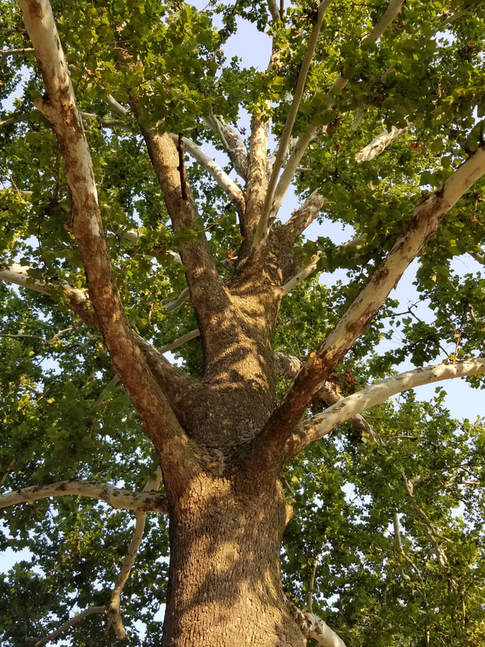 The picture above is of Seymour. My sycamore tree. I named him because I talk to him all the time. He is a beautiful, stately, big, strong tree that has been protecting our house, surviving even having his roots trimmed to make room for a new garage and many, many storms in his life. He's resilient for sure. I was introduced to a very cool tree trimming dude after a recent storm passed through that had left a very large upper branch dangling up high in this tree. I asked what, if anything, does Seymour and other trees in my yard need to be healthy and well cared for and Riley suggested a trim of the lower branches to boost their energy and health. This tree is pretty important to me and I told the tree trimmer this. He said exactly what I needed to hear to be reassured… “I will take care of it as if it were mine.” Perfect. So, they trimmed off some fairly substantial lower limbs. I cringed as they did it, even though I knew my intention was to care for the tree and help it to be its best – not to hurt it. Sometimes in our lives, we too have lower branches that are draining our energy. These aren’t “bad” or “wrong” branches (people/circumstances), just lower energies that pull us down a bit and slow us from becoming stronger, more beautiful and whole. Those lower branches of Seymour were an important part of his development. Very needed at the time they came to be part of him. They helped him to become stronger early on. Some of these lower branches can end up preventing us from being fully healthy emotionally. Cutting them off – ugh. It is often deeply painful and difficult. I don’t know if Seymour feels pain where his lower branches were cut – but I feel some pain for him when I look at them. It takes some getting used to seeing him a bit more "naked" or the way I am used to seeing him. But then, I look up. I see this massive, amazing feat of nature that looks strong, shapely, majestic and knowing. He is so much more than his cuts, or his removed lower branches that had become a drag on his overall health. Those lower branches didn’t obscure the beauty of the bigger picture of this tree, they simply blocked off some of his own access to his full power. And it is the same with you and I with our own lower branches that drain our energy. Removing these lower energies (branches) from our lives usually requires some help from those who love us. Doing it on our own and just ripping it off without tools or help - trying to gut it out with willpower, leaves a bigger wound that takes longer to heal and is more susceptible to “infection” and staying open and oozing longer. You can see in the two photos above, one limb removal with tools will likely heal faster than the one left jagged and without help. What does help look like for us humans in these removals?
I tell Seymour daily how even MORE beautiful he is now and that I hope he is healing from his trimming of the lower branches that were draining his energies. I give him a little pat and some love each time I walk by. We must also do this for ourselves as we trim up our lives. What lower branches do you need to trim from your life? It may be other people or conditions. Or it may be that we need to remove things that we have created internally with mental or emotional habits like damaging thoughts or limiting beliefs. It may be thinking poorly of yourself, it may be beliefs that you hold about yourself that hold you back. What drains our energies may show up as other people, but the root of that manifestation is in our beliefs about ourselves. Our relationship with others is simply a movie screen that shows the relationship we have with ourselves. Please don’t make this into blaming yourself for any life-sucking situations you may currently be experiencing. Just know that you have the power to be accountable for your role in the conditions and that means you have the power to change it. This is very good news! Pay attention to what lights you up, when you feel happy, alive and free. Trim off anything you can that is counter to this in your life. Trimming our lives of the things that drain our energy is not easy. You’ll most likely need some help in the support of a close friend or a professional “trimmer” like a counselor or coach, but do it. Do it because the world needs your full beam energy. We need your light to shine as brightly as possible. That’s how you serve the world. XOXXOXOXO, Sandy 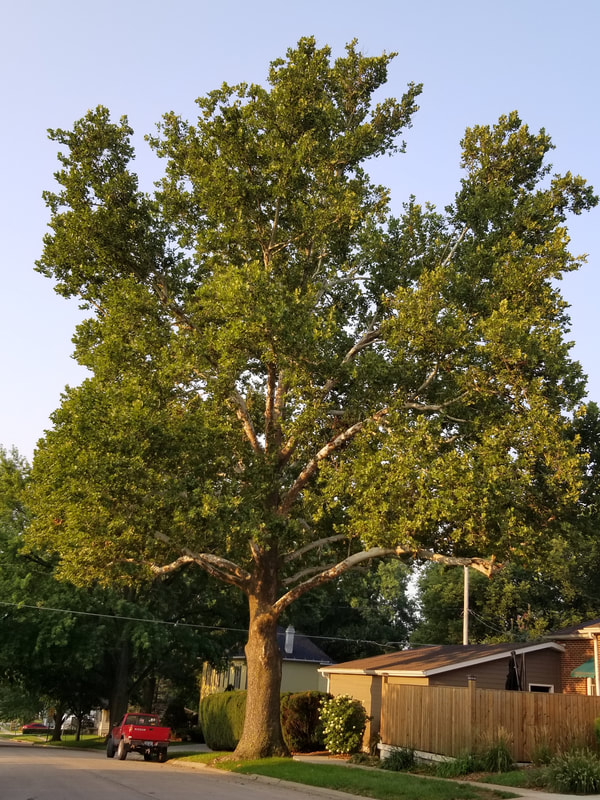 |
Sandy Edie HansenI use this space to "Chat" about things I am working through and learning in my life currently. Join me! Archives
September 2022
Categories
|